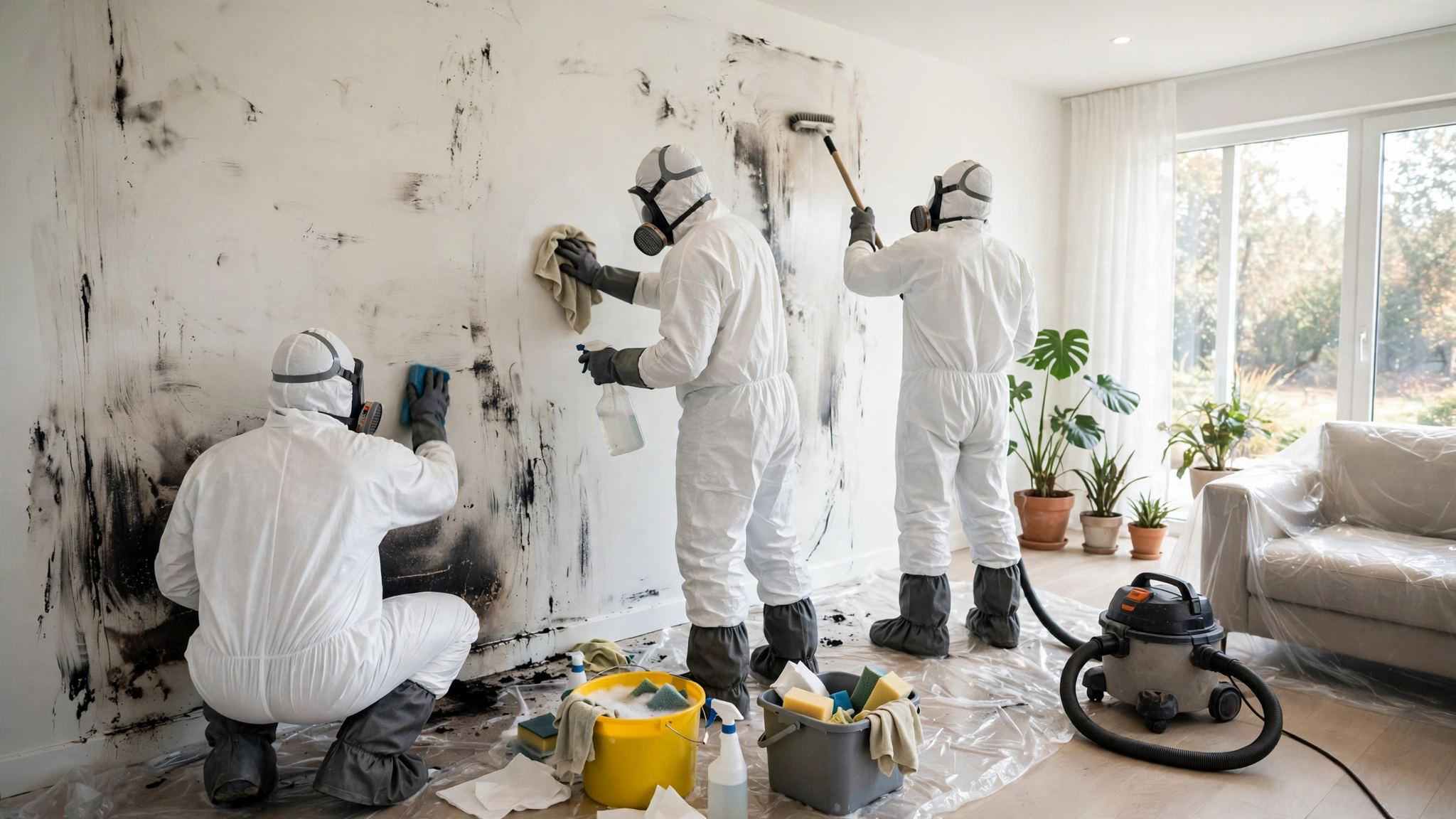
What is fire damage restoration in Arizona, in short?
Fire damage restoration deals with flame, smoke, and water together, in the right order: assess and make safe, remove debris and water, clean smoke and soot, then dry and repair. Smoke smell and soot in rooms that did not burn are common, and surface cleaning alone often is not enough — the source in surfaces, ducts, and soft materials has to be addressed.
Service
Fire Damage Restoration
Location
Arizona
Areas covered
10 cities
Coverage
By ZIP — call to check yours
Key facts for Arizona: 4 service options explained on this site, 4 process steps, 10 questions answered below. Prices are given as a written scope for your exact situation, not as a fixed price on this page.
📍10Cities covered
🔧4Service options explained
❓10Questions answered below
📞Call NowTo call (555) 010-1234
Our services
What we help with in Arizona
Each option below is explained in plain language — what it covers, when it is the right choice, and what to ask about before work starts.
Diagnosis first — the cause is checked before parts are replaced.
Signs you need fire damage restoration
✓Soot or a smoke smell remains after a fire, even in rooms that did not burn.
✓Walls, ceilings, or contents are stained, warped, or smell of smoke.
✓Water damage is present from firefighting, sprinklers, or hoses.
✓Electrical systems, vents, or ductwork may have been exposed to heat or smoke.
✓You are unsure whether the structure, air quality, or contents are safe.
How it works
How fire damage restoration works
Illustrative photo — fire damage restoration work, not a specific customer job.
1
1. Assess and make safe
The building is assessed for structural safety, smoke spread, and water damage, and the affected areas are secured.
Step 1 of 4
2
2. Remove debris and water
Debris and standing water are removed first, so drying and cleaning can start on a stable base.
Step 2 of 4
3
3. Clean smoke and soot
Surfaces, contents, and air pathways are cleaned for soot and smoke residue, room by room.
Step 3 of 4
4
4. Dry, repair, and finish
Wet materials are dried, damaged sections are repaired, and finishes are restored so the room looks and feels normal again.
Step 4 of 4
Why call
A better way to get fire damage restoration help
Illustrative photo — fire damage restoration work, not a specific customer job.
✓
Explained before it is fixed
You hear what is wrong, what the options are, and what it costs before anyone starts.
$
Priced before work starts
A clear, written scope — not a vague estimate that grows as the job goes on.
📍
Local to Arizona
Service areas, neighbourhoods, and local conditions are covered on this site, not generic advice.
📞
One call to start
Describe the problem and where you are, and get connected to help for your area.
Illustrative photo — fire damage restoration work, not a specific customer job.
What moves the price
$How much of the building was affected by flame, smoke, or water.
$Whether structural repairs, drywall, or flooring replacement are needed.
$How much content cleaning or replacement is involved.
$Drying time and the extent of water damage from firefighting.
$Access, permits, and coordination with insurers where applicable.
Illustrative photo — fire damage restoration work, not a specific customer job.
What to do first
!Do not re-enter a fire-damaged building until it has been declared safe.
!Do not turn on electrical systems or appliances that may have been damaged.
!Do not try to clean soot with household products — the wrong product can set staining permanently.
!Take photos for your records if it is safe to do so, and keep damaged items until you are advised otherwise.
Related help · Water damage
Water damage after a fire in Arizona
Image placeholder
Water damage related to Arizona — image placeholder, not a customer photo.
Water used to fight a fire soaks into floors, walls, and contents that never burned. That water has to be removed and the building dried properly, or smoke cleaning alone will not be enough. Drying, cleaning, and repair need to happen in that order, with the wettest materials dealt with first.
Stop the source first
Turn off the relevant water supply or, after a fire, follow the safety advice for re-entry. Do not wade into water near electrics or gas appliances.
Dry, do not just mop
Surface water is only part of it. Water hides under flooring, behind baseboards, and inside wall cavities, and it needs proper drying.
Document everything
Photograph the damage, keep a simple list of affected rooms and items, and do not throw items away until you have been advised.
Note: there is no standalone water-damage domain in this 19-site batch. Water damage is covered here as a related section only. If you need water-damage help in Arizona, call (555) 010-1234.
Fire Damage Restoration in Arizona: the full guide, in plain language
Illustrative photo — fire damage restoration work, not a specific customer job.
Fire damage restoration is often misunderstood as a single job, when in practice it is three jobs that overlap: dealing with what burned, dealing with smoke and soot, and dealing with water. Flames may have been contained to one room, but smoke travels through doorways, vents, and ceiling voids, and soot settles on surfaces far from the fire itself. Water from firefighting, sprinklers, or hoses then soaks floors, walls, and contents that never burned at all. A restoration plan that only addresses the charred area will leave the rest of the building smelling of smoke, damp underneath, and unsafe in ways that are not obvious at first glance.
The first days after a fire are also when the most expensive mistakes are made, usually with good intentions. Well-meaning cleaning with the wrong product can set soot staining permanently into paint, fabric, and stone. Throwing away damaged items before they are documented can weaken an insurance claim. Turning electrical systems back on before they have been checked can create a second risk. And leaving wet materials to dry on their own, without proper drying, can allow mould and odour to take hold inside walls and under floors, where they are much harder and more expensive to deal with later. The right sequence — make safe, remove debris and water, clean smoke and soot, dry, repair, and finish — exists to prevent those second problems.
A realistic restoration also has to be honest about what can be saved and what cannot. Hard, non-porous surfaces can often be cleaned. Soft furnishings, books, and porous materials that have absorbed heavy smoke or water are harder to save, and in some cases replacement is the honest answer. Contents cleaning, pack-out, and storage exist for that reason: items that can be saved are cleaned away from the damaged building, while the structure itself is dried and repaired. The goal throughout is not to make the building look briefly clean, but to return it to a condition where it is dry, free of smoke residue, and safe to live in for the long term.
Service options, explained in detail
Smoke and soot cleanup in Arizona
When you need smoke and soot cleanup in Arizona, the first question is not which product or package looks best in a brochure. It is what problem you are actually trying to solve, how urgent it is, and what a good outcome looks like in your home or building. Fire Damage Restoration work of this kind varies more than most people expect from one property to the next, because age, construction, previous work, and local conditions all change what is involved. A clear scope should therefore name the work itself, the materials or parts involved, what is included and what is not, and how the result will be checked before the job is signed off. If a proposal cannot explain those points in plain language, it is not yet ready to approve, however attractive the headline price may look. In Arizona, local conditions also matter: the climate, the age of the housing stock, and the way homes in this area were built all affect which approach is most durable, and a local conversation about those factors is worth more than a generic national guide.
Before you commit, ask how long the work is expected to take, what disruption to expect, what decisions you will need to make along the way, and what happens if something unexpected is found once work starts. Those questions are not difficult, and a professional provider should welcome them. They are also the questions that prevent the most common disappointments: work that starts without a clear plan, costs that grow because the scope was vague, and finishes that look good on day one but do not hold up. For smoke and soot cleanup in particular, the difference between a good result and a mediocre one is usually in the preparation and the checking at the end, not in the most visible part of the job, so give those stages the attention they deserve.
Structural fire repair in Arizona
When you need structural fire repair in Arizona, the first question is not which product or package looks best in a brochure. It is what problem you are actually trying to solve, how urgent it is, and what a good outcome looks like in your home or building. Fire Damage Restoration work of this kind varies more than most people expect from one property to the next, because age, construction, previous work, and local conditions all change what is involved. A clear scope should therefore name the work itself, the materials or parts involved, what is included and what is not, and how the result will be checked before the job is signed off. If a proposal cannot explain those points in plain language, it is not yet ready to approve, however attractive the headline price may look. In Arizona, local conditions also matter: the climate, the age of the housing stock, and the way homes in this area were built all affect which approach is most durable, and a local conversation about those factors is worth more than a generic national guide.
Before you commit, ask how long the work is expected to take, what disruption to expect, what decisions you will need to make along the way, and what happens if something unexpected is found once work starts. Those questions are not difficult, and a professional provider should welcome them. They are also the questions that prevent the most common disappointments: work that starts without a clear plan, costs that grow because the scope was vague, and finishes that look good on day one but do not hold up. For structural fire repair in particular, the difference between a good result and a mediocre one is usually in the preparation and the checking at the end, not in the most visible part of the job, so give those stages the attention they deserve.
Content cleaning and pack-out in Arizona
When you need content cleaning and pack-out in Arizona, the first question is not which product or package looks best in a brochure. It is what problem you are actually trying to solve, how urgent it is, and what a good outcome looks like in your home or building. Fire Damage Restoration work of this kind varies more than most people expect from one property to the next, because age, construction, previous work, and local conditions all change what is involved. A clear scope should therefore name the work itself, the materials or parts involved, what is included and what is not, and how the result will be checked before the job is signed off. If a proposal cannot explain those points in plain language, it is not yet ready to approve, however attractive the headline price may look. In Arizona, local conditions also matter: the climate, the age of the housing stock, and the way homes in this area were built all affect which approach is most durable, and a local conversation about those factors is worth more than a generic national guide.
Before you commit, ask how long the work is expected to take, what disruption to expect, what decisions you will need to make along the way, and what happens if something unexpected is found once work starts. Those questions are not difficult, and a professional provider should welcome them. They are also the questions that prevent the most common disappointments: work that starts without a clear plan, costs that grow because the scope was vague, and finishes that look good on day one but do not hold up. For content cleaning and pack-out in particular, the difference between a good result and a mediocre one is usually in the preparation and the checking at the end, not in the most visible part of the job, so give those stages the attention they deserve.
Odour removal after fire in Arizona
When you need odour removal after fire in Arizona, the first question is not which product or package looks best in a brochure. It is what problem you are actually trying to solve, how urgent it is, and what a good outcome looks like in your home or building. Fire Damage Restoration work of this kind varies more than most people expect from one property to the next, because age, construction, previous work, and local conditions all change what is involved. A clear scope should therefore name the work itself, the materials or parts involved, what is included and what is not, and how the result will be checked before the job is signed off. If a proposal cannot explain those points in plain language, it is not yet ready to approve, however attractive the headline price may look. In Arizona, local conditions also matter: the climate, the age of the housing stock, and the way homes in this area were built all affect which approach is most durable, and a local conversation about those factors is worth more than a generic national guide.
Before you commit, ask how long the work is expected to take, what disruption to expect, what decisions you will need to make along the way, and what happens if something unexpected is found once work starts. Those questions are not difficult, and a professional provider should welcome them. They are also the questions that prevent the most common disappointments: work that starts without a clear plan, costs that grow because the scope was vague, and finishes that look good on day one but do not hold up. For odour removal after fire in particular, the difference between a good result and a mediocre one is usually in the preparation and the checking at the end, not in the most visible part of the job, so give those stages the attention they deserve.
Warning signs, in detail
Soot or a smoke smell remains after a fire, even in rooms that did not burn.
This sign matters because it is often the earliest visible clue that something has changed in the home or building, and early clues are cheaper and easier to act on than later damage. Do not ignore it, and do not assume it will resolve on its own. Note when you first noticed it, whether it is getting worse, and whether it affects one room or several, because that information helps a professional assess urgency and likely cause on the first call. In Arizona, where fire damage restoration issues are commonly linked to local housing age and climate, a sign like this should prompt a conversation, not a wait-and-see approach that allows a small problem to become a larger repair.
Walls, ceilings, or contents are stained, warped, or smell of smoke.
This sign matters because it is often the earliest visible clue that something has changed in the home or building, and early clues are cheaper and easier to act on than later damage. Do not ignore it, and do not assume it will resolve on its own. Note when you first noticed it, whether it is getting worse, and whether it affects one room or several, because that information helps a professional assess urgency and likely cause on the first call. In Arizona, where fire damage restoration issues are commonly linked to local housing age and climate, a sign like this should prompt a conversation, not a wait-and-see approach that allows a small problem to become a larger repair.
Water damage is present from firefighting, sprinklers, or hoses.
This sign matters because it is often the earliest visible clue that something has changed in the home or building, and early clues are cheaper and easier to act on than later damage. Do not ignore it, and do not assume it will resolve on its own. Note when you first noticed it, whether it is getting worse, and whether it affects one room or several, because that information helps a professional assess urgency and likely cause on the first call. In Arizona, where fire damage restoration issues are commonly linked to local housing age and climate, a sign like this should prompt a conversation, not a wait-and-see approach that allows a small problem to become a larger repair.
Electrical systems, vents, or ductwork may have been exposed to heat or smoke.
This sign matters because it is often the earliest visible clue that something has changed in the home or building, and early clues are cheaper and easier to act on than later damage. Do not ignore it, and do not assume it will resolve on its own. Note when you first noticed it, whether it is getting worse, and whether it affects one room or several, because that information helps a professional assess urgency and likely cause on the first call. In Arizona, where fire damage restoration issues are commonly linked to local housing age and climate, a sign like this should prompt a conversation, not a wait-and-see approach that allows a small problem to become a larger repair.
You are unsure whether the structure, air quality, or contents are safe.
This sign matters because it is often the earliest visible clue that something has changed in the home or building, and early clues are cheaper and easier to act on than later damage. Do not ignore it, and do not assume it will resolve on its own. Note when you first noticed it, whether it is getting worse, and whether it affects one room or several, because that information helps a professional assess urgency and likely cause on the first call. In Arizona, where fire damage restoration issues are commonly linked to local housing age and climate, a sign like this should prompt a conversation, not a wait-and-see approach that allows a small problem to become a larger repair.
The process, step by step, in detail
1. Assess and make safe
The building is assessed for structural safety, smoke spread, and water damage, and the affected areas are secured. In practice, this stage is where a good job is won or lost, because it is the point at which assumptions are checked against reality. A professional will explain what they found at this stage, what it means for the rest of the job, and whether the original plan still holds or needs to change. If the plan does change, the change should be explained and agreed before work continues, not discovered later in an invoice. For fire damage restoration in Arizona, this stage also has to account for local access, local conditions, and the specific construction of the property, which is why a generic timeline without a property-specific check is rarely reliable.
2. Remove debris and water
Debris and standing water are removed first, so drying and cleaning can start on a stable base. In practice, this stage is where a good job is won or lost, because it is the point at which assumptions are checked against reality. A professional will explain what they found at this stage, what it means for the rest of the job, and whether the original plan still holds or needs to change. If the plan does change, the change should be explained and agreed before work continues, not discovered later in an invoice. For fire damage restoration in Arizona, this stage also has to account for local access, local conditions, and the specific construction of the property, which is why a generic timeline without a property-specific check is rarely reliable.
3. Clean smoke and soot
Surfaces, contents, and air pathways are cleaned for soot and smoke residue, room by room. In practice, this stage is where a good job is won or lost, because it is the point at which assumptions are checked against reality. A professional will explain what they found at this stage, what it means for the rest of the job, and whether the original plan still holds or needs to change. If the plan does change, the change should be explained and agreed before work continues, not discovered later in an invoice. For fire damage restoration in Arizona, this stage also has to account for local access, local conditions, and the specific construction of the property, which is why a generic timeline without a property-specific check is rarely reliable.
4. Dry, repair, and finish
Wet materials are dried, damaged sections are repaired, and finishes are restored so the room looks and feels normal again. In practice, this stage is where a good job is won or lost, because it is the point at which assumptions are checked against reality. A professional will explain what they found at this stage, what it means for the rest of the job, and whether the original plan still holds or needs to change. If the plan does change, the change should be explained and agreed before work continues, not discovered later in an invoice. For fire damage restoration in Arizona, this stage also has to account for local access, local conditions, and the specific construction of the property, which is why a generic timeline without a property-specific check is rarely reliable.
Pricing, in detail
How much of the building was affected by flame, smoke, or water.
This factor affects price because it changes the amount of work, the materials, or the time required, and it is one of the reasons why two apparently similar jobs can be priced very differently. A written quote should show how this factor has been accounted for, rather than hiding it inside a single lump sum. If you are comparing quotes for fire damage restoration in Arizona, compare them factor by factor, not just by total: a lower total that omits a major factor is not a saving, it is a cost that will appear later. Ask for the breakdown, ask what is excluded, and ask what would change the price if conditions on site differ from what was assumed.
Whether structural repairs, drywall, or flooring replacement are needed.
This factor affects price because it changes the amount of work, the materials, or the time required, and it is one of the reasons why two apparently similar jobs can be priced very differently. A written quote should show how this factor has been accounted for, rather than hiding it inside a single lump sum. If you are comparing quotes for fire damage restoration in Arizona, compare them factor by factor, not just by total: a lower total that omits a major factor is not a saving, it is a cost that will appear later. Ask for the breakdown, ask what is excluded, and ask what would change the price if conditions on site differ from what was assumed.
How much content cleaning or replacement is involved.
This factor affects price because it changes the amount of work, the materials, or the time required, and it is one of the reasons why two apparently similar jobs can be priced very differently. A written quote should show how this factor has been accounted for, rather than hiding it inside a single lump sum. If you are comparing quotes for fire damage restoration in Arizona, compare them factor by factor, not just by total: a lower total that omits a major factor is not a saving, it is a cost that will appear later. Ask for the breakdown, ask what is excluded, and ask what would change the price if conditions on site differ from what was assumed.
Drying time and the extent of water damage from firefighting.
This factor affects price because it changes the amount of work, the materials, or the time required, and it is one of the reasons why two apparently similar jobs can be priced very differently. A written quote should show how this factor has been accounted for, rather than hiding it inside a single lump sum. If you are comparing quotes for fire damage restoration in Arizona, compare them factor by factor, not just by total: a lower total that omits a major factor is not a saving, it is a cost that will appear later. Ask for the breakdown, ask what is excluded, and ask what would change the price if conditions on site differ from what was assumed.
Access, permits, and coordination with insurers where applicable.
This factor affects price because it changes the amount of work, the materials, or the time required, and it is one of the reasons why two apparently similar jobs can be priced very differently. A written quote should show how this factor has been accounted for, rather than hiding it inside a single lump sum. If you are comparing quotes for fire damage restoration in Arizona, compare them factor by factor, not just by total: a lower total that omits a major factor is not a saving, it is a cost that will appear later. Ask for the breakdown, ask what is excluded, and ask what would change the price if conditions on site differ from what was assumed.
Smoke and soot: why cleaning order matters
Illustrative photo — fire damage restoration work, not a specific customer job.
Soot is not ordinary dirt, and the order in which it is cleaned matters more than most people expect. Dry soot, wet soot, and oily soot behave differently, and using the wrong method first can drive staining deeper into paint, fabric, and stone, or spread it to surfaces that were previously clean. That is why professional cleaning starts with assessment and dry removal where appropriate, and only then moves to wet cleaning with products suited to the surface and the type of residue. Household all-purpose cleaners, bleach, and vigorous scrubbing are common causes of permanent staining after a fire, even when the intention was to help.
•Do not scrub soot with household cleaners before the residue type is identified.
•Do not run heating or cooling systems that may spread soot through ductwork.
•Do not paint over soot-stained surfaces until they have been properly cleaned.
•Photograph rooms before any cleaning, for insurance and for the restoration plan.
Contents: cleaning, pack-out, and what to expect
Illustrative photo — fire damage restoration work, not a specific customer job.
Contents work is the part of fire restoration that most affects daily life, because it determines what you get back and when. Items that can be cleaned are often packed out to a cleaning facility, where they can be treated away from the damaged building, inventoried, and returned in stages. Items that cannot be cleaned are documented and, where appropriate, disposed of through the proper route. The inventory matters: a simple list, with photographs, protects both the homeowner and the insurer, and it prevents the confusion that comes from trying to remember, months later, what was in a room that has since been rebuilt.
Drying after firefighting water: the hidden half of the job
Illustrative photo — fire damage restoration work, not a specific customer job.
Water damage after a fire is easy to underestimate, because the fire itself is more dramatic. But water hides in places that are not visible: under flooring, behind baseboards, inside wall cavities, and in insulation that looks dry on the surface. If that water is not properly dried, it can lead to mould, odour, and deterioration of materials that were not burned at all. Proper drying uses measurement, not guesswork — moisture readings taken over time, in multiple locations — and it continues until materials have actually returned to dry standards, not just until they feel dry to the touch.
Rebuilding: what a staged plan should look like
Illustrative photo — fire damage restoration work, not a specific customer job.
A staged plan is more useful than a single completion date, especially for larger fires. It should separate the work into phases — make safe and secure, debris and water removal, cleaning, drying, structural repair, and finishing — with a clear scope for each phase and a point at which you can review progress before the next phase starts. That structure protects everyone: it prevents finishing work from being done over damp or soot-contaminated surfaces, it makes insurance documentation clearer, and it gives the homeowner a realistic sense of timing, rather than a date that slips repeatedly without explanation.
Service areas
Cities we cover in Arizona
Click a city for fire damage restoration help in that city, including its neighbourhoods.
Coverage honesty: LeadSmart coverage is sold by ZIP code, and live buyer coverage in a specific ZIP can change over time. The cities and neighbourhoods listed here are major service-area guides for Arizona — they are real places, and they are not a guarantee that a buyer is available in every ZIP on any given day. No ZIP list is invented on this page, and no street address is claimed. If you are unsure whether help is available for your exact area, call and ask — that is the fastest way to get an accurate answer for your ZIP.
Illustrative photo — fire damage restoration work, not a specific customer job.
Short explainer video — illustrative footage of this kind of work, not a specific customer job.
Illustrative photo — fire damage restoration work, not a specific customer job.
Gallery
Browse fire damage restoration work in Arizona
Browse the gallery to get a sense of the kinds of fire damage restoration work covered on this site. Images are illustrative photos of this kind of work, not photos of a specific customer job.
Illustrative photo — fire damage restoration work, not a specific customer job.Illustrative photo — fire damage restoration work, not a specific customer job.Illustrative photo — fire damage restoration work, not a specific customer job.Illustrative photo — fire damage restoration work, not a specific customer job.Illustrative photo — fire damage restoration work, not a specific customer job.Illustrative photo — fire damage restoration work, not a specific customer job.Illustrative photo — fire damage restoration work, not a specific customer job.Illustrative photo — fire damage restoration work, not a specific customer job.
Questions, answered
Good to know before you call
Illustrative photo — fire damage restoration work, not a specific customer job.
Can smoke damage be cleaned without replacing everything?⌄
Often, yes. Many hard surfaces and some contents can be cleaned. Porous materials that have absorbed heavy smoke are harder to save and may need replacement.
How long does fire restoration take?⌄
A small, contained fire can take days. A larger fire with structural work takes weeks. You should get a staged plan, not a single vague date.
Will the smoke smell go away?⌄
Surface cleaning alone often is not enough. Odour work has to address the source — soot in surfaces, ducts, and soft materials — not just mask the smell.
Should I keep damaged items for insurance?⌄
Yes, keep them until you have been advised. Photograph them, list them, and do not dispose of anything you may need to evidence.
Do you work with insurance claims?⌄
Restoration work is commonly documented for insurance purposes. Ask for a written scope and itemised documentation you can pass to your insurer.
How much does fire damage restoration cost?⌄
There is no fixed price, because cost depends on how much of the building was affected by flame, smoke, and water, and whether structural repair or content work is needed. A written, staged scope is the only accurate price.
What is the first step after a fire?⌄
Do not re-enter the building until it has been declared safe. If it is safe to do so, photograph damage for your records, keep damaged items until advised otherwise, and then call about assessment and securing the building.
Can you remove smoke smell completely?⌄
It depends on where the smell is coming from. Surface cleaning alone often is not enough — soot in surfaces, ducts, and soft materials has to be addressed at the source, not just masked. A crew should explain what can and cannot be fully removed in your case.
Do I need to move out during fire restoration?⌄
It depends on which rooms are affected and whether the building is safe to live in. If smoke, water, or structural damage affects living areas, a temporary move is often necessary — ask for a staged plan that says which rooms are usable and when.
How do I choose a fire restoration company?⌄
Ask for a written scope, a staged plan, and itemised documentation you can pass to your insurer. Avoid anyone who gives a single lump-sum price with no breakdown, or who promises a completion date before assessing the building.