Biohazard Cleanup · Phoenix, AZ

Call Now: (555) 010-1234
☰ MenuOpen ▾

Phoenix Biohazard Cleanup · Hoarding-related biohazard cleanup in Phoenix, AZ · Biohazard Cleanup in Sunnyslope · Call Now

Hoarding-related biohazard cleanup in Sunnyslope

This is the one page for hoarding-related biohazard cleanup in Sunnyslope, Phoenix, AZ. For hoarding-related biohazard cleanup across all of Phoenix, AZ, use the parent subservice page. For the full biohazard cleanup service in Sunnyslope, use the area page. This page does not repeat either of them in full — it covers this subservice, in this area, only.

📞 Call Now: (555) 010-1234
✓ Priced before work starts✓ Coverage by ZIP — call to check

Local help

Hoarding-related biohazard cleanup help for Sunnyslope

In Sunnyslope, hoarding-related biohazard cleanup follows the same diagnosis-first approach as elsewhere in Phoenix, AZ, with the difference being local: access, property types, and conditions in Sunnyslope itself. Coverage is by ZIP — if you are unsure whether help is available for your exact address in Sunnyslope, call and ask for your ZIP rather than assuming from this page alone.

When to call for biohazard cleanup

✓Blood, bodily fluids, or medical waste are present and the area cannot be used safely.
✓An unattended death, accident, or injury has left contamination behind.
✓There is a strong odour, visible staining, or material that you cannot identify.

How biohazard cleanup is handled — in Sunnyslope

1

1. Assess and contain

The affected area is assessed first, then contained so material is not tracked into other rooms while work is under way.

2

2. Remove contaminated material

Items and materials that cannot be safely disinfected are removed and disposed of through the proper waste route.

3

3. Clean and disinfect

Remaining surfaces are cleaned, then disinfected, with attention to the places people actually touch and use.

4

4. Check and hand back

The room is checked again before it is handed back, with a plain-language summary of what was done and what was removed.

Hoarding-related biohazard cleanup work in Sunnyslope

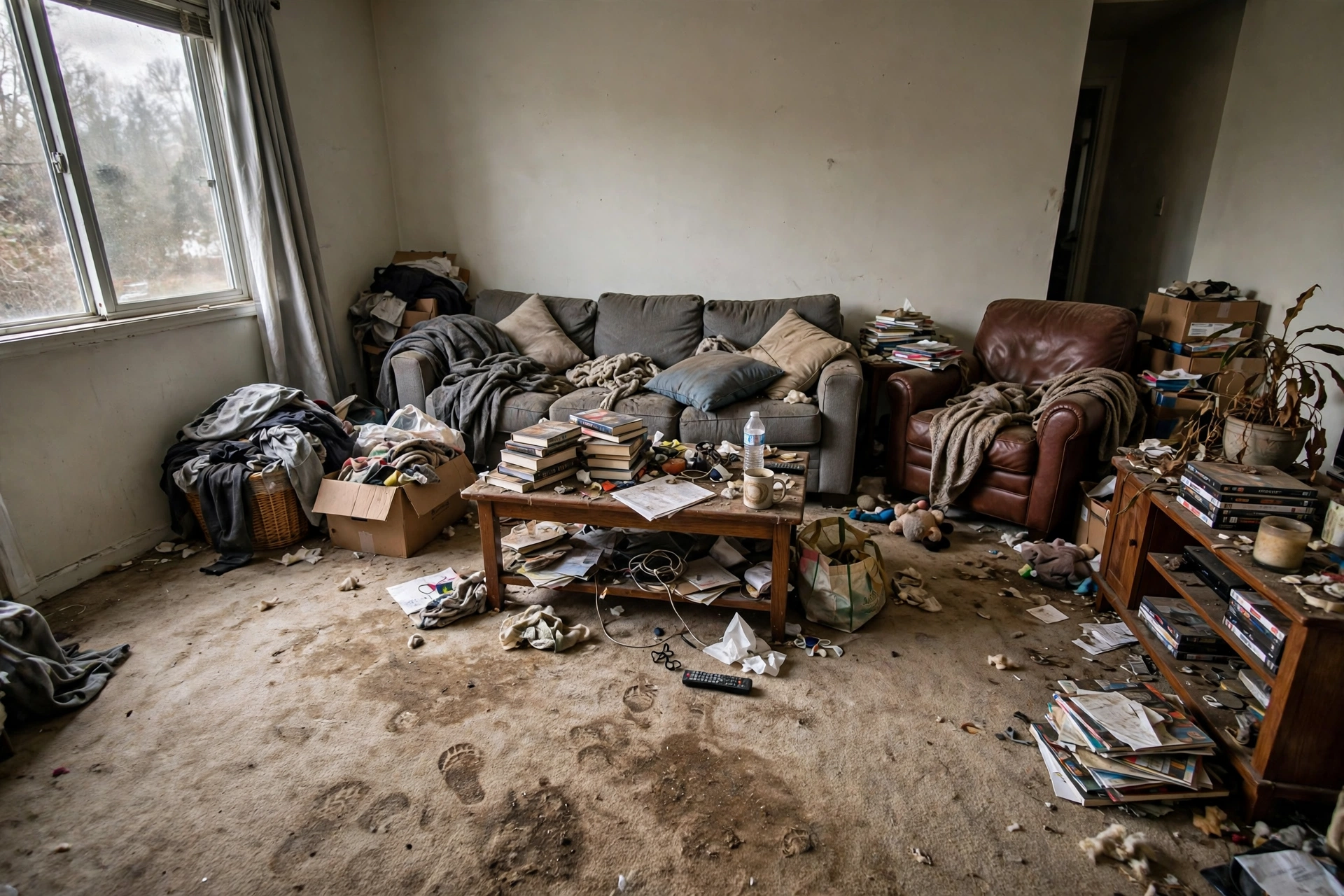
Illustrative photo — hoarding-related biohazard cleanup work in Sunnyslope, not a specific customer job

▶ Watch: hoarding-related biohazard cleanup in Sunnyslope — illustrative video, not a specific customer job

Frequently asked questions

Is biohazard cleanup the same as normal cleaning?⌄

No. Normal cleaning removes dirt. Biohazard cleanup removes contaminated material, disinfects what can be saved, and follows a documented process for waste handling.

Can I stay in the home while the work is done?⌄

That depends on which rooms are affected. The affected room should stay closed off, and the crew will explain which parts of the home are safe to use.

Guides and blueprints

Biohazard Cleanup guides and blueprints — Hoarding-related biohazard cleanup in Sunnyslope

The guides below cover hoarding-related biohazard cleanup in Sunnyslope specifically: the blueprint for this subservice in this area, how to decide it is the right choice here, what to check before work starts, what moves its price, safety, and aftercare. For this subservice across all of Phoenix, AZ, use the parent subservice page; for the full service in Sunnyslope, use the area page.

01 · BLUEPRINTStep by step

Blueprint: biohazard cleanup, step by step — Hoarding-related biohazard cleanup in Sunnyslope

Biohazard cleanup is not ordinary cleaning done more thoroughly. It is a contained, documented process whose order matters: keep people out, assess and contain, remove what cannot be made safe, disinfect what can, then check and hand the room back. Skipping a step, or cleaning in the wrong order, risks spreading material to rooms that were previously clean, which is why the blueprint below is followed in sequence rather than picked from.

  1. 1

    Step 1 — Keep people and pets out of the affected room, and call emergency services first if anyone is injured or in danger.

  2. 2

    Step 2 — Do not mop, vacuum, bleach, or move items out of the room yourself; each of those actions can spread contamination to clean areas.

  3. 3

    Step 3 — Assess the area and contain it, so material is not tracked into other rooms while work is under way.

  4. 4

    Step 4 — Remove contaminated material that cannot be safely disinfected, and handle it through the proper regulated waste route, never ordinary household waste.

  5. 5

    Step 5 — Clean and then disinfect the surfaces that can be saved, with attention to the places people actually touch and use.

  6. 6

    Step 6 — Check the room again, including odour and staining, and confirm what was removed, what was disinfected, and what remains to be replaced.

  7. 7

    Step 7 — Hand the room back with a plain-language summary and documentation you can keep, including waste handling and anything you still need to do.

Blueprint: biohazard cleanup, step by step — Biohazard Cleanup guide illustration
Illustrative photo — biohazard cleanup work, not a specific customer job.
02

Guide: what to ask before cleanup starts — Hoarding-related biohazard cleanup in Sunnyslope

The most useful question before biohazard cleanup is not how fast it can be done, but what the scope covers. Ask what will be removed, what will be disinfected, how waste will be handled, and what documentation you will receive at the end. A written scope that answers those four questions is worth more than a reassurance, because it is what you can check against when the work is finished.

Ask too about containment and access. Work should be contained to the affected area, so it does not spread through the rest of the home, and you should be told which rooms are safe to use while work is under way. If privacy matters to you, say so on the call and ask how the visit and waste handling will be managed, so there are no surprises on the day.

Do not judge a cleanup by whether the room looks clean alone. Odour, staining in porous materials, and soft furnishings that have absorbed contamination can remain even when hard surfaces look fine, and those are the items most likely to need removal rather than disinfection. A crew that explains which items fall into each category, and why, is giving you the information you need to decide.

Guide: what to ask before cleanup starts — Biohazard Cleanup guide illustration
Illustrative photo — biohazard cleanup work, not a specific customer job.
✓ Priced before work starts✓ Coverage by ZIP — call to check
03

Guide: what to do first, and what not to do — Hoarding-related biohazard cleanup in Sunnyslope

Before cleanup, the safest action is often inaction in the affected room. Keep people and pets out if you can, leave the room as it is if it is safe to do so, and do not try to mop, vacuum, or bleach the area yourself. Household cleaning products and ordinary equipment can spread biological material rather than remove it, and moving items out of the room can carry contamination into clean rooms.

Do not put contaminated items in ordinary household waste, and do not throw away items that may be needed for documentation or insurance until you have been advised. Photograph the area only if it is safe and appropriate to do so, and keep a note of what happened and when, because that record helps both the cleanup scope and any insurance question that follows.

If someone is injured or in danger, that comes before any cleanup call. Call emergency services first, and only then arrange cleanup. Once the immediate danger is handled, the cleanup call can focus on containment, scope, and timing, without the pressure of an emergency distorting the plan.

Guide: what to do first, and what not to do — Biohazard Cleanup guide illustration
Illustrative photo — biohazard cleanup work, not a specific customer job.
✓ Priced before work starts✓ Coverage by ZIP — call to check
04

Guide: common biohazard mistakes to avoid — Hoarding-related biohazard cleanup in Sunnyslope

The most damaging mistake is attempting to clean a biohazard area with household methods. Bleach, mops, and vacuum cleaners are designed for dirt, not biological contamination, and they can spread material across floors, into air pathways, and onto surfaces that were previously clean. What looks like progress can therefore make the affected area larger and the eventual cleanup harder.

A second mistake is deciding what to keep and what to throw away before assessment. Soft furnishings and porous materials are harder to make safe than hard, non-porous surfaces, and a decision made in haste can either discard items that could have been disinfected or keep items that cannot be made safe. Let the crew assess first, then decide with their explanation in hand.

A third mistake is treating the end of visible cleaning as the end of the job. Odour, staining, and contamination in places people do not look — under fixtures, in soft materials, in air pathways — can remain after a surface clean. Ask for a check of the room before it is handed back, and a summary of what was removed, what was disinfected, and what still needs attention.

Guide: common biohazard mistakes to avoid — Biohazard Cleanup guide illustration
Illustrative photo — biohazard cleanup work, not a specific customer job.
✓ Priced before work starts✓ Coverage by ZIP — call to check
05

Guide: what moves the price, in detail — Hoarding-related biohazard cleanup in Sunnyslope

Price moves first on the size of the affected area and how many rooms are involved. A single contained room is a different job from contamination that has spread across several rooms or into flooring and fixtures, and the scope should reflect that difference in writing rather than as a single lump sum.

What kind of material is present, and how far it has spread, moves the price second, because it decides how much material must be removed, how much can be disinfected, and how much waste must go through a regulated disposal route. Flooring, drywall, or fixtures that need to be removed and replaced add work that a surface-clean price does not show.

Access, timing, and urgency are the third factor. Work that must happen urgently, or in a difficult-to-access area, is priced differently from scheduled work in an accessible room. As with other services here, a written scope for your exact situation, agreed before work starts, is the only accurate price, and it should name the waste route and the documentation you will receive.

Guide: what moves the price, in detail — Biohazard Cleanup guide illustration
Illustrative photo — biohazard cleanup work, not a specific customer job.
✓ Priced before work starts✓ Coverage by ZIP — call to check
06

Guide: safety and privacy during cleanup — Hoarding-related biohazard cleanup in Sunnyslope

Safety during biohazard cleanup starts with containment. The affected room should stay closed off, people and pets should stay out, and work should not track material into other rooms. If you are unsure whether a surface is safe to touch, sit on, or walk across, treat it as unsafe until the crew has assessed it, rather than testing it yourself.

Privacy is a legitimate part of safety here too. Work contained to the affected area does not need to spread through the rest of the home, and waste handling should be managed in a way you have agreed in advance. If discretion matters to you, raise it on the call, not after the crew has arrived, so the visit can be planned around it.

After cleanup, safety is about the handover, not just the appearance of the room. Ask what was removed, what was disinfected, what was checked, and what, if anything, still needs to be replaced or repaired. Keep that summary with any insurance documentation, because it is the record that the room was made safe, not just made to look clean.

Guide: safety and privacy during cleanup — Biohazard Cleanup guide illustration
Illustrative photo — biohazard cleanup work, not a specific customer job.
✓ Priced before work starts✓ Coverage by ZIP — call to check
07

Guide: after cleanup — checks and next steps — Hoarding-related biohazard cleanup in Sunnyslope

Once the room is handed back, check it against the scope you agreed, not against a general impression. Was everything listed for removal actually removed? Were the surfaces listed for disinfection disinfected? Is there remaining odour or staining that was not explained? Those are the questions that tell you whether the job is complete, and they are easier to ask while the summary is still fresh.

Soft furnishings and porous materials deserve a second look in the days after cleanup. If odour returns, or staining reappears, report it early rather than assuming it will fade. Some materials hold contamination in ways that only become obvious after the room is used again, and an early report gives the crew a chance to address it under the original scope.

Keep the documentation from the job together: the scope, the summary of what was done, the waste handling route, and anything you passed to an insurer. That file is useful if a question arises later about the room, if further work is needed on flooring or fixtures, or if you need to show that the cleanup was handled through a proper route.

Guide: after cleanup — checks and next steps — Biohazard Cleanup guide illustration
Illustrative photo — biohazard cleanup work, not a specific customer job.
✓ Priced before work starts✓ Coverage by ZIP — call to check
08

Guide: questions to ask before you book — Hoarding-related biohazard cleanup in Sunnyslope

Before you book biohazard cleanup, ask what the scope covers in four parts: what will be removed, what will be disinfected, how waste will be handled, and what documentation you will receive. A written scope that answers all four is the basis for checking the job afterwards, and it is also what you can pass to an insurer. If any of the four is vague, ask for it to be made specific before work starts.

Ask about containment and which rooms are safe to use while work is under way. Work should be contained to the affected area, and you should be told plainly which rooms to avoid and for how long. If privacy matters to you, raise it on this call and ask how the visit and waste handling will be managed, so discretion is planned rather than improvised on arrival.

Ask too about porous materials and soft furnishings, because those are where most scope disagreements arise. Which items can be disinfected, which are likely to need removal, and why? A crew that explains that distinction for your room, item by item where needed, is giving you the information to decide, rather than asking you to accept a blanket rule.

Guide: questions to ask before you book — Biohazard Cleanup guide illustration
Illustrative photo — biohazard cleanup work, not a specific customer job.
✓ Priced before work starts✓ Coverage by ZIP — call to check
09

Guide: planning checklist for a biohazard cleanup — Hoarding-related biohazard cleanup in Sunnyslope

Use this checklist to plan a biohazard cleanup without making the situation worse. First, keep people and pets out of the affected room, and call emergency services first if anyone is injured or in danger. Second, do not mop, vacuum, bleach, or move items out of the room yourself, and do not put contaminated items in ordinary household waste, because each of those actions can spread contamination.

Third, note what happened and when, and keep a record of the affected rooms and items, without disturbing them. Fourth, agree the scope in writing: what will be removed, what will be disinfected, how waste will be handled through a proper route, and what documentation you will receive at handover. Fifth, agree containment and privacy arrangements before the crew arrives, including which rooms stay usable and how the visit will be managed.

Sixth, plan for the handover check. When the room is handed back, check it against the scope: was everything listed for removal removed, were listed surfaces disinfected, and is there remaining odour or staining that was not explained? Keep the scope, the summary, and the waste documentation together with any insurance paperwork, so the cleanup is evidenced as well as completed.

Guide: planning checklist for a biohazard cleanup — Biohazard Cleanup guide illustration
Illustrative photo — biohazard cleanup work, not a specific customer job.
✓ Priced before work starts✓ Coverage by ZIP — call to check
10

Guide: red flags when choosing a cleanup company — Hoarding-related biohazard cleanup in Sunnyslope

A red flag is a promise to clean a biohazard area with ordinary cleaning methods, or a price given without asking what material is present, how far it has spread, or how many rooms are involved. Biohazard scope depends on those facts, and a company that does not ask them before pricing is not scoping your job; it is quoting a generic service that may not match what your room needs.

Another red flag is vague waste handling. Contaminated material must go through a proper regulated disposal route, not ordinary household waste, and a company should be able to say what route will be used for your job and what documentation you will receive. If waste handling is brushed aside, or described only as taken care of, ask for the specifics before booking.

A third red flag is a handover with no summary. A room that looks clean is not the same as a room that has been checked, and a company that leaves without a plain-language summary — what was removed, what was disinfected, what was checked, what still needs attention — leaves you unable to verify the work or to answer an insurer's questions. A written handover is part of the job, not an optional extra.

Guide: red flags when choosing a cleanup company — Biohazard Cleanup guide illustration
Illustrative photo — biohazard cleanup work, not a specific customer job.
✓ Priced before work starts✓ Coverage by ZIP — call to check
11

Guide: after you call — what happens next — Hoarding-related biohazard cleanup in Sunnyslope

After you call, the first thing that should happen is a clear conversation about containment, not a price. Expect to be asked which room is affected, what material is present, and how many rooms are involved, because those answers shape the scope. You should also be told which rooms to keep closed off, and which rooms remain safe to use, so the affected area stays contained while the visit is arranged.

Next comes assessment, then a written scope, then work in sequence. Assessment confirms what will be removed, what will be disinfected, and how waste will be handled through a proper route, and the scope should name all four parts — removal, disinfection, waste, and documentation — before work starts. Work then follows the blueprint order: contain, remove, disinfect, check, and hand back, rather than cleaning in whatever order is fastest.

After work, expect a check and a handover summary. The room should be checked against the scope, including odour and staining, and you should receive a plain-language summary of what was removed, what was disinfected, what was checked, and what, if anything, still needs attention. Keep that summary with any insurance paperwork, because it is the record that the room was made safe, not just made to look clean.

Guide: after you call — what happens next — Biohazard Cleanup guide illustration
Illustrative photo — biohazard cleanup work, not a specific customer job.
✓ Priced before work starts✓ Coverage by ZIP — call to check

Planning notes

Planning notes — Hoarding-related biohazard cleanup in Sunnyslope: signs, price factors, and what to have ready

Use this checklist alongside the guides above when you plan biohazard cleanup — Hoarding-related biohazard cleanup in Sunnyslope. Work through the signs first, then the price factors, so your call starts with facts about your property rather than a general question. Coverage is by ZIP — call to check your exact address — and prices are given as a written scope for your situation, not as a fixed price on this page.

Signs to note before you call

  • ✓Blood, bodily fluids, or medical waste are present and the area cannot be used safely.
  • ✓An unattended death, accident, or injury has left contamination behind.
  • ✓There is a strong odour, visible staining, or material that you cannot identify.
  • ✓You are unsure whether a surface is safe to touch, sit on, or walk across.
  • ✓A previous clean-up attempt has left staining, odour, or doubt about what remains.

Price factors to ask about in your written scope

  • $How large the affected area is, and how many rooms are involved.
  • $What kind of material is present and how far it has spread.
  • $Whether flooring, drywall, or fixtures need to be removed and replaced.
  • $How much waste has to be handled through a regulated disposal route.
  • $Access, timing, and whether the work needs to happen urgently.

Have ready for the call: the signs you have noticed, when they started, what you have already tried, and any photos you took safely. That information shortens diagnosis, sharpens the written scope, and prevents the same questions being asked twice.

📞 Call Now: (555) 010-1234

Before & after

See the difference — Hoarding-related biohazard cleanup in Sunnyslope

See the difference first, then call — no form, just a call. The images below are illustrative examples of biohazard cleanup work, not a specific customer job.

Before — Disordered room → clean roomBefore
After — Disordered room → clean roomAfter

Disordered room → clean room

Illustrative example, not a specific customer job.

Why call

Why people call for biohazard cleanup — Hoarding-related biohazard cleanup in Sunnyslope

$

Priced before work

A written scope for your situation, agreed before work starts — not a fixed price guessed from a web page.

⌖

Coverage by ZIP

Call to check your exact address. No ZIP list is invented, and no coverage is promised that is not checked.

✓

Assessed first

Diagnosis and assessment come before work, so the fault — not a guess — decides what is done.

☎

Call only, no form

No form to fill in and wait on. Call, explain what you see, and get a scope for your property.

Ready when you are

Seen enough? Call now for biohazard cleanup — Hoarding-related biohazard cleanup in Sunnyslope

See the difference above, check the guides, then call. No form, no waiting for a reply — just a call, a scope, and a plan for your property.

📞 Call Now: (555) 010-1234
✓ Priced before work starts✓ Coverage by ZIP — call to check

Call Now

(555) 010-1234

Temporary number for checking — replace with the real LeadSmart number before publishing.